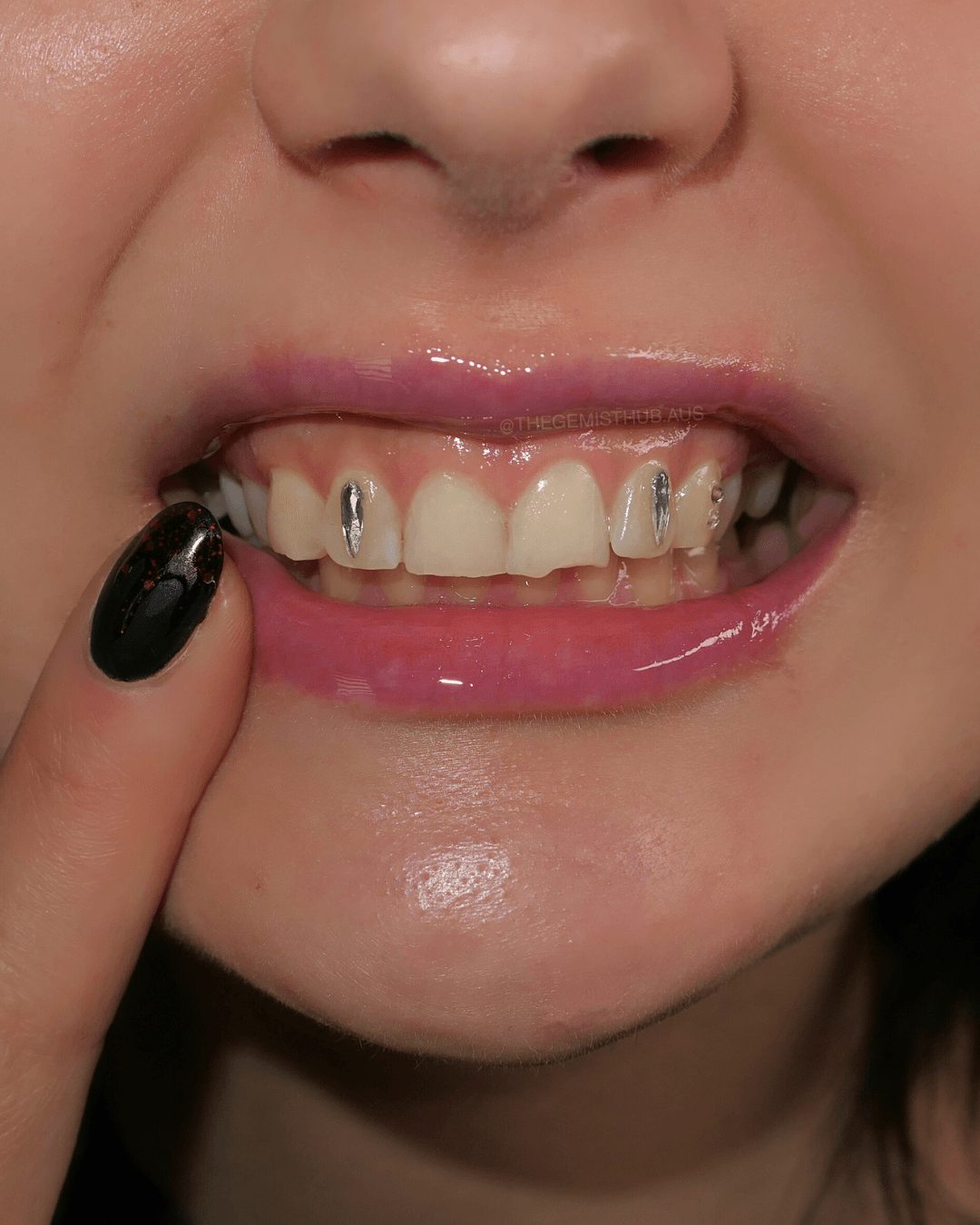

A client messages you: "My gem fell off." What's your first response?
If you're like most technicians, you probably ask what they ate, whether they brushed too hard, or if they bumped it. You're looking for something the client did wrong to explain the failure.
Here's a better first question: "How long ago was it applied?"
That single piece of information tells you more about what went wrong than any amount of questioning about their aftercare routine. Because tooth gem failures follow predictable timelines, and each timeline points to a different root cause. Understanding these timelines transforms you from someone who makes excuses to someone who can diagnose issues systematically and improve your practice.
Why Timeline Matters More Than You Think
In dental science, we use temporal patterns to diagnose problems. A tooth that hurts when you bite down suggests one issue. A tooth that hurts spontaneously at night suggests something completely different. Same tooth, different timing, different diagnosis.
Tooth gem failures work the same way. The timeline of detachment tells you whether the problem was your technique, the client's behaviour, normal material degradation, or something else entirely. Stop asking "what did the client do wrong?" and start asking "what does the timeline reveal?"
The Four Failure Timelines
Based on clinical observation across 600+ clients and conversations with hundreds of technicians globally, tooth gem failures cluster into four distinct timelines. Each has different causes, different implications for your practice, and different corrective actions.
Timeline 1: Early Failure (0-2 Weeks) — Technique Error
If a gem falls off within the first two weeks, this is almost certainly a bonding technique issue. Not "bad luck." Not "the client ate the wrong thing." Your technique.
Common causes of early failure:
- Moisture contamination during bonding. Even a tiny amount of saliva disrupts the bond between composite and enamel at a molecular level. The proteins in saliva interfere with adhesion to hydroxyapatite crystals.
- Inadequate etching. If you didn't etch long enough or didn't cover the full bonding area, the mechanical interlock between composite and enamel never formed properly.
- Insufficient curing. Under-cured composite hasn't completed polymerisation, leaving it weak and prone to failure under normal occlusal forces.
- Composite placement errors. Not enough composite, air bubbles in the composite, or composite that wasn't properly adapted to both the gem base and the tooth surface.
- Poor isolation. Working in an area with active salivary flow, not using adequate retraction, or rushing through the procedure.
Early failures are the ones you CAN and SHOULD prevent through technique refinement. They're also the most damaging to your reputation because they signal incompetence to clients.
Early failures are not bad luck. They are feedback. Your technique needs adjustment.
What to do about early failures:
Document every early failure in detail. What tooth position? What was happening in the mouth during application? How confident were you about isolation? Were you rushing? Over time, you'll spot patterns. Maybe you consistently struggle with lower incisors due to saliva pooling. Maybe your curing light needs a new bulb. Maybe you need better retraction tools.
Then systematically address the pattern. If moisture is your issue, invest in better isolation equipment and slow down your workflow. If etching is inconsistent, use a timer rather than estimating. If curing is the problem, test your light's output and replace bulbs regularly.
Early failures should decrease over time as you refine your technique. If they don't, you need targeted training on bonding fundamentals.
Timeline 2: Mid-Term Failure (2 Weeks to 6 Months) — Client Factors
If a gem makes it past the two-week mark but fails before six months, you're likely looking at client-related factors rather than technique issues. The bond was initially sound, but something in the client's oral environment or behaviour compromised it.
Common causes of mid-term failure:
- Dietary habits. Regular consumption of hard foods (ice, hard lollies, nuts) or sticky foods (caramel, chewy lollies) creates mechanical stress that degrades the bond over time.
- Oral hygiene extremes. Either aggressive brushing that mechanically stresses the gem, or poor hygiene leading to plaque accumulation and acid production around the bonding site.
- Bruxism (teeth grinding). Clients who grind or clench their teeth generate massive occlusal forces that composite isn't designed to withstand long-term, especially on anterior teeth.
- Medication changes. New medications causing dry mouth reduce the protective buffering effect of saliva, potentially increasing caries risk and affecting the oral environment around the gem.
- Lifestyle changes. Increased alcohol consumption, smoking, new sports activities involving mouthguards, or changes in eating patterns.
The challenge with mid-term failures is that clients often don't connect their behaviour to the outcome. They don't think "I've been chewing ice for three months" is relevant information. They just know the gem fell off and wonder if you did something wrong.
What to do about mid-term failures:
This is where your consultation process becomes critical. You need to screen for risk factors BEFORE application, not investigate them after failure. Ask about grinding, dietary habits, oral hygiene routines, medications, and lifestyle factors.
For high-risk clients, you have three options: decline the application, apply with clear risk disclosure and lower warranty coverage, or provide specific modified aftercare instructions. What you should NOT do is apply normally and hope for the best.
When mid-term failures do occur, use them as opportunities to educate. Explain the connection between diet and gem longevity. Discuss bruxism and its effects on dental work generally. Position yourself as a knowledgeable professional, not a defensive technician.
Timeline 3: Normal End-of-Life (1-2 Years) — Expected Degradation
Here's something most technicians don't understand: a gem that falls off after 12-24 months is NOT a failure. It's the normal end of the material's lifespan.
Dental composites are not permanent materials. They degrade over time through:
- Hydrolytic degradation. Water absorption causes slow breakdown of the resin matrix.
- Mechanical wear. Constant micro-movements from talking, chewing, and normal tooth flexion create fatigue in the material.
- Thermal cycling. Hot and cold foods cause expansion and contraction, creating micro-gaps at the interface.
- Chemical exposure. Acids from food and beverages, enzymes in saliva, and other chemical factors slowly break down the bond.
In clinical dentistry, composite restorations typically need replacement every 5-10 years. Tooth gems, being smaller and often on anterior teeth with more movement, have shorter lifespans. One to two years is excellent longevity.
A gem lasting 18 months is a success story, not a failure. Manage client expectations from the start.
What to do about normal end-of-life detachments:
Set expectations during the initial consultation. Explain that gems typically last 6-18 months, with some lasting up to two years. This is normal. It's not a defect in your work or their behaviour. It's material science.
When a client returns after 12+ months with a detached gem, celebrate it. "Amazing! You got over a year out of that. Most clients get 6-12 months. Would you like to have it rebonded?" Frame it as a positive outcome, because it is.
Consider offering a rebonding service at a discounted rate for gems that lasted over 12 months. This rewards good oral health habits and positions you as someone who values long-term client relationships over one-time transactions.
Want to reduce preventable failures and set proper client expectations? The Tooth Gem Technician Masterclass includes detailed protocols for client screening, risk assessment, and communication strategies. Learn the frameworks that separate professional practices from hobbyists.
Timeline 4: Red Flag Territory (10+ Years) — Cause for Concern
Occasionally, you'll encounter a client who says their gem has been on for many years. Five years. Ten years. Sometimes longer. This is not something to celebrate. This is a red flag.
Here's why: if composite dental work has been in someone's mouth for 10+ years without professional monitoring, there are potential issues beneath the surface that aren't visible:
- Micro-leakage. Over many years, micro-gaps form at the composite-enamel interface, potentially allowing bacterial infiltration.
- Hidden decay. Caries can develop under composite without obvious external signs, especially if oral hygiene has been poor.
- Enamel changes. The enamel around the composite may have demineralised or changed in ways that aren't immediately visible.
- Composite degradation products. Old composite can leach potentially harmful degradation products into the surrounding tissue.
Additionally, someone who has had a gem on for 10+ years has likely not seen a dentist in that time period. That's a significant oral health concern regardless of the gem's status.
What to do about extremely long-lasting gems:
If a client presents with a gem they claim has been on for many years and wants it replaced, refer them to a dentist first. Explain that whilst it's impressive it stayed on so long, you want to ensure the underlying tooth structure is healthy before rebonding.
If they resist or say they don't have a regular dentist, offer to remove the gem but decline to rebond until they've had a dental check-up. Position this as professional responsibility, not excessive caution.
Document the conversation thoroughly. You're protecting both the client's oral health and your professional liability.
Using the Framework: Practical Application
Let's walk through how this framework changes your response to failure scenarios:
Scenario 1: Client messages four days after application. Gem fell off whilst eating breakfast.
Your response: "I'm so sorry that happened. Since it came off within the first week, this indicates the bond didn't set properly during application. This is on me, not anything you did. I'd like to reapply at no charge and take extra care with the bonding process. When can you come in?"
You've taken responsibility, explained the cause, and offered a solution. Professional and honest.
Scenario 2: Client messages three months after application. Gem fell off yesterday. During questioning, you learn they've started a new medication for anxiety that causes dry mouth.
Your response: "Thanks for letting me know about the medication change. Dry mouth significantly affects oral health and can impact how long dental work lasts. The reduced saliva flow changes the environment in your mouth. I'd recommend seeing your dentist for a check-up given the medication change, and we can discuss rebonding once we know everything's healthy. In the meantime, stay well hydrated and consider a saliva substitute product."
You've identified the cause, educated the client, prioritised their oral health, and maintained your professional credibility.
Scenario 3: Client messages 16 months after application. Gem fell off last week.
Your response: "That's fantastic that you got 16 months! Most gems last 6-12 months, so you clearly took great care of it. The composite material naturally degrades over time, so this is completely expected. Would you like to book in to have it rebonded? I offer a loyalty discount for rebonds after 12+ months."
You've framed it positively, explained the science, and offered continued service. The client feels valued, not blamed.
Building Your Diagnostic Skills
Start tracking failures systematically. Create a simple spreadsheet with these columns:
- Date of application
- Date of failure
- Timeline category (early/mid-term/normal/long-term)
- Tooth position
- Identified cause or risk factors
- Action taken
After 20-30 documented failures, patterns will emerge. You'll see whether your failures cluster in the early timeline (technique issues), mid-term timeline (screening issues), or are mostly normal end-of-life detachments.
This data transforms your practice. Instead of feeling defensive about each failure, you're collecting diagnostic information. Instead of generic improvements, you're making targeted changes based on actual patterns.
The Professional Difference
Hobbyists blame clients. Professionals diagnose issues.
The Failure Timeline Framework gives you a systematic way to understand what's happening in your practice. It removes the emotion and guesswork from failure analysis. It positions you as someone who understands the science, not just the technique.
More importantly, it gives you language to discuss failures with clients in a way that maintains trust and demonstrates expertise. You're not making excuses. You're explaining biological and material science principles.
That's the difference between a technician and a professional. And it's the foundation of a sustainable, reputable tooth gem practice.
Start using this framework today. Track your next 10 failures by timeline. See what patterns emerge. Then address the root causes systematically, not symptomatically.
Your failure rate will drop. Your confidence will rise. And your clients will notice the difference.