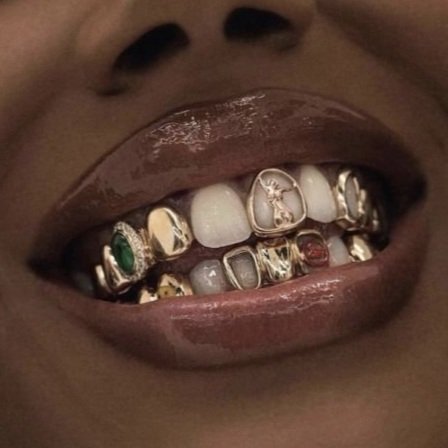

I used to blame my clients when gems fell off.
Not directly, of course. I'd say things like "you must have eaten something hard" or "did you brush too aggressively?" I'd reassure them it was just bad luck, that these things happen sometimes. But internally, I was panicking. I had no idea why some gems lasted years whilst others fell off within weeks. I was guessing, and I knew it.
That was my reality as a self-taught tooth gem technician running a side hustle from my garage. I'd watched YouTube tutorials, practised on friends, and built a decent client base through Instagram. I thought I knew what I was doing. I was wrong.
The Turning Point: When Guesswork Wasn't Enough
The moment that changed everything was a client who'd had gems applied by me three times. Three separate appointments. All three fell off within two weeks. She was lovely about it, but I could see the frustration. And honestly? I was frustrated too. I'd followed the exact same technique each time. I'd used quality materials. I'd given her detailed aftercare instructions.
So why did it keep failing?
I had no answer. No framework for troubleshooting. No understanding of what variables might be at play. I was operating purely on technique without understanding the biological and chemical principles beneath it. That's when I realised: if I wanted to build a legitimate tooth gem practice, I needed to actually understand what was happening inside my clients' mouths.
The difference between a technician and a professional isn't just skill. It's the ability to explain WHY something works or doesn't work.
Returning to Education: The University of Sydney
Enrolling in a Bachelor of Oral Health at the University of Sydney wasn't an easy decision. I was already making decent money from tooth gems. I had a growing client base. Why spend years studying dentistry when I could just keep practising and refining my technique?
But deep down, I knew. I knew that every failure I couldn't explain was a crack in my credibility. I knew that the anxiety before each appointment, wondering if this gem would stay or not, wasn't sustainable. I needed knowledge, not just skills.
The first semester changed everything. Learning about enamel biology was like someone turning on the lights in a room I'd been stumbling through in the dark. Suddenly, I understood why moisture contamination was such a critical issue. It wasn't just "keep it dry because that's what the tutorial said." It was because saliva contains proteins that interfere with the chemical bond between adhesive and hydroxyapatite crystals in enamel.
The Science Behind the Technique
As I progressed through my degree, every module gave me new lenses through which to understand tooth gem application. Adhesive chemistry explained why etching times mattered. Microbiology explained why infection prevention protocols weren't optional. Pharmacology explained why clients on certain medications experienced higher failure rates.
But the most transformative subject? Clinical assessment. Learning how to evaluate oral health status, identify risk factors, and document findings systematically gave me a framework that went far beyond "does this tooth look clean?"
I started understanding that the same bonding technique could have wildly different outcomes depending on variables I'd never even considered:
- Enamel quality variations between clients
- Dietary habits affecting saliva pH
- Bruxism creating mechanical stress patterns
- Existing dental work creating structural weaknesses
- Medications affecting saliva production
These weren't excuses. They were diagnostic factors. And once I understood them, I could screen for them during consultations, adjust my technique accordingly, or decline applications when risk factors were too high.
From Anxiety to Confidence
The shift in my practice was immediate. Instead of hoping each gem would stay on, I could predict with reasonable confidence which applications would succeed and which were high-risk. Instead of defensive conversations when gems failed, I could have educational discussions about the biological factors involved.
One client came back after a gem fell off at three weeks. Old me would've been anxious and apologetic. New me? I asked targeted questions: "Have you started any new medications? Changed your diet recently? Been more stressed than usual?" Turned out she'd started a medication that caused dry mouth. We had a conversation about saliva's role in oral health, I educated her about increased caries risk, and referred her to a dentist for a check-up. Then we discussed whether rebonding was appropriate or if we should wait.
She became one of my most loyal clients and referred six friends. Why? Because I didn't just apply gems. I demonstrated professional knowledge and genuine care for her oral health.
When you can explain the biological 'why' behind a failure, clients don't see it as your incompetence. They see it as your expertise.
The Revelation: Understanding Gem Failures
Perhaps the most valuable thing my dental education gave me was a systematic framework for understanding failures. I learned that not all failures are created equal. Early failures indicate technique issues. Mid-term failures suggest client factors or aftercare problems. Long-term detachment is often just normal material degradation.
This framework eliminated the guesswork. When a gem fell off, I could trace back through my clinical notes, identify the likely cause, and either refine my technique or improve my client screening process. Each failure became a learning opportunity rather than a source of stress.
What This Means for Technicians Today
I'm sharing this story because I see so many technicians where I used to be. Talented, passionate, building businesses through sheer determination and Instagram marketing. But operating without the foundational knowledge that transforms good technique into excellent clinical practice.
You don't need a dental degree to apply tooth gems professionally. But you do need to understand the science. You need to know what's happening at a microscopic level when you etch enamel. You need to understand adhesive chemistry, not just "apply this, then that." You need to recognise clinical risk factors, not just hope for the best.
Ready to move from guessing to knowing? The Tooth Gem Technician Masterclass covers all the dental science fundamentals you need, without requiring a four-year degree. Explore the curriculum and see how scientific knowledge transforms your practice.
The Business Impact of Knowledge
Here's what happened to my practice after completing my dental education:
- Failure rates dropped from approximately 15% to under 3%
- Client retention increased because I could troubleshoot and explain issues professionally
- Referral rates skyrocketed because clients felt they were receiving genuine healthcare, not just a beauty service
- I could confidently charge premium rates because I was offering expertise, not just execution
- Insurance concerns diminished because I had proper clinical documentation and risk assessment protocols
But perhaps most importantly, the anxiety disappeared. I no longer dreaded the DM from a client saying their gem fell off. I had frameworks for assessment, protocols for response, and knowledge to support my recommendations.
Your Path Forward
My journey went through formal dental education, but that's not the only path. What matters is recognising that technique without understanding is fragile. It works until it doesn't, and when it doesn't, you're left guessing.
The tooth gem industry is maturing. Clients are asking more sophisticated questions. Regulations are tightening. The difference between technicians who thrive and those who struggle will increasingly come down to professional knowledge, not just Instagram-worthy results.
You can make that shift now. You can move from guessing to explaining, from anxiety to confidence, from hoping it works to understanding why it works. That's what separates a side hustle from a sustainable professional practice.
And trust me, once you make that shift, you'll never want to go back to guessing again.
This is the foundation of everything we teach at The Gemist Hub Academy. Because you deserve to work with confidence, not cross your fingers and hope.