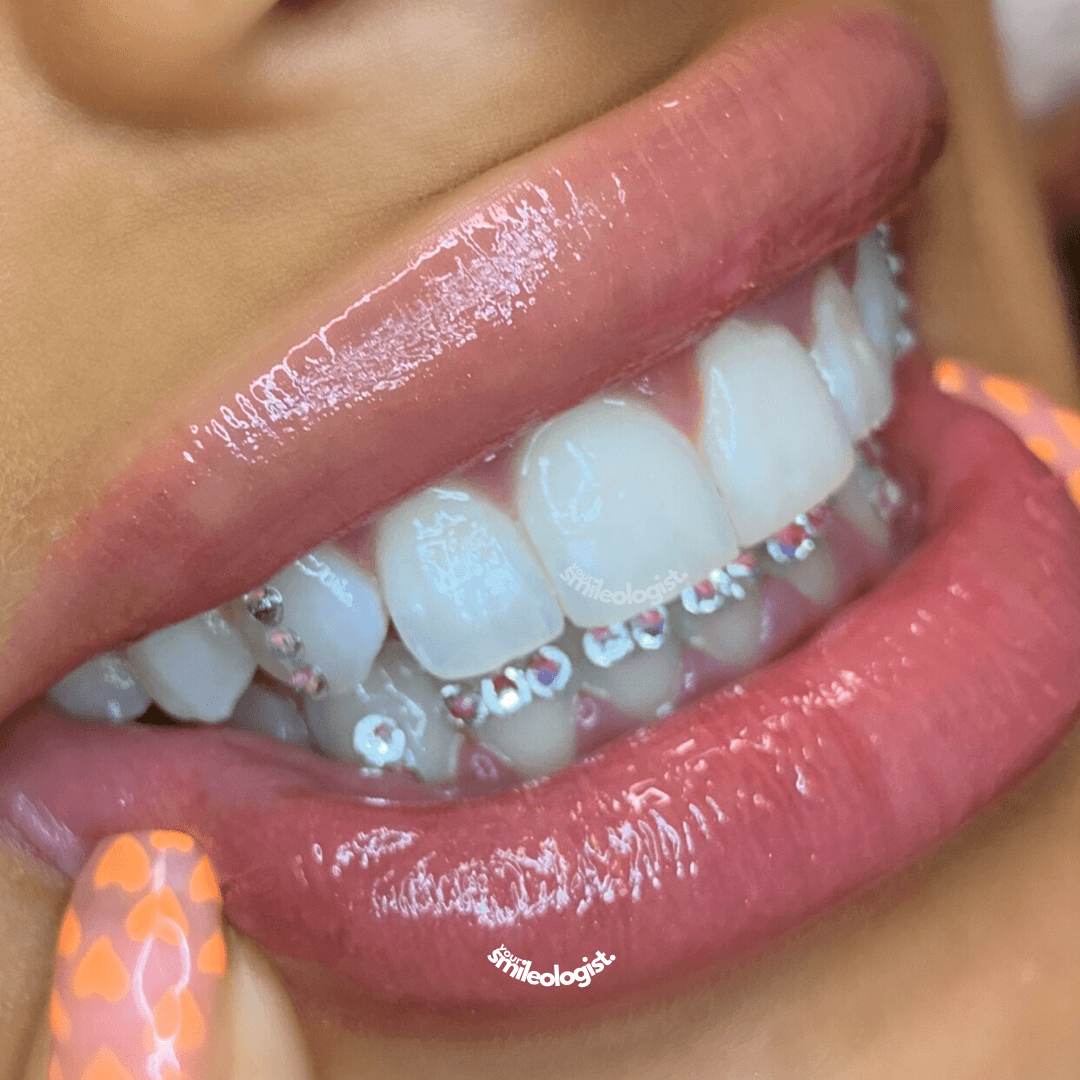

I see it every week. A talented technician messages me: "I'm charging $50 per gem, working flat out, and barely covering my materials. What am I doing wrong?"
The answer is always the same: you're competing on price instead of value. And that race to the bottom? Everyone loses.
After working with 600+ clients and training technicians globally, I've watched brilliant practitioners sabotage their businesses before they even start. Not because they lack skill, but because they fundamentally misunderstand how clients perceive value.
The Race to the Bottom: When Everyone Loses
When you enter the tooth gem industry, the easiest strategy feels obvious: charge less than your competitors. Undercut the $80 technician by offering $60 gems. Surely clients will flood to you?
Here's what actually happens. You attract price-sensitive clients who will leave you the moment someone charges $55. You work harder for less money. You can't afford quality materials or ongoing training. Your competitors drop their prices to match yours. Suddenly, everyone's charging $40 for work that costs $30 in materials and takes 45 minutes. The maths doesn't work.
I've watched entire local markets collapse this way. Five technicians all charging $35-50, all struggling, all bitter that "tooth gems aren't profitable." Meanwhile, one technician in the same suburb charges $180 and has a three-week waiting list.
The difference isn't location or luck. It's understanding price psychology.
Price-Quality Association: What Clients Actually Think
Humans are wired to associate price with quality. It's called the price-quality heuristic, and it's particularly strong in industries where clients can't easily judge technical skill.
Can your client tell the difference between proper enamel etching and surface bonding? Between medical-grade adhesive and craft glue? Between a trained dental professional and someone who watched YouTube videos?
No. So they use price as a proxy for expertise.
When you charge $45 for a tooth gem, clients assume you're either inexperienced, unqualified, or cutting corners. When you charge $150, they assume you're the best in the business. Often, they're right on both counts.
"I doubled my prices and lost three clients. But the new clients I attracted were dream customers: respectful, excited about my work, and they referred their friends. Losing those price-shoppers was the best thing that happened to my business." — Graduate of The Gemist Hub Masterclass
The Hidden Cost of Undercharging
Cheap pricing doesn't just hurt your bank account. It destroys your business from the inside out.
Burnout: When you're charging $50 per gem, you need to see eight clients a day just to make $400. That's exhausting, unsustainable, and leaves no time for marketing, training, or client relationship building.
Material shortcuts: You can't afford premium Swarovski crystals or medical-grade bonding agents when your margin is $20. So you compromise on materials, which leads to failures, which damages your reputation.
No reinvestment: Professional development costs money. Proper training, advanced techniques, certification courses — all impossible when you're barely breaking even. You stay stuck at beginner level forever.
Client quality: Price-sensitive clients are often the most demanding, the quickest to complain, and the least likely to refer. They're shopping on price because they don't value expertise. That's exhausting to deal with daily.
I've seen brilliant technicians quit the industry entirely because they were charging $40 and working themselves to death. The same skills, same passion, just catastrophically wrong pricing.
Struggling with pricing? The Gemist Hub Masterclass includes a complete pricing psychology module with consultation frameworks, value communication scripts, and pricing tier templates. Learn the strategies that helped our graduates triple their prices.
Anchoring Effect: Show Premium First
Here's a psychological trick that works every time: anchoring.
Clients make judgements relative to the first number they see. If you show them a $50 option first, a $100 option feels expensive. If you show them a $250 option first, a $150 option feels like a deal.
This is why I structure my consultations to present the premium option first. Custom design with Swarovski crystals, multi-gem placement, detailed aftercare, professional photography for their Instagram. $250.
Then the mid-tier: single premium crystal, standard placement, aftercare guide. $150.
Suddenly, $150 doesn't feel expensive. It feels like the sensible middle option. Most clients choose it, and I've just anchored them to see $150 as reasonable.
When I started, I did the opposite. I led with "$50 for a basic gem" and clients couldn't understand why I'd charge more. I was anchoring them to cheap.
The $80 to $250 Journey: What Actually Changes
What justifies charging $250 instead of $80? Is it just confidence? Marketing?
No. Real value increases come from real skill improvements.
Training: I'm an AHPRA-registered oral health therapist, University of Sydney graduate, ADA member. That matters. Clients trust dental professionals with their oral health, and they should. Credentials justify premium pricing because they represent genuine expertise.
Materials: I use medical-grade bonding agents, genuine Swarovski crystals, and proper infection control protocols. These cost more, but they last longer and fail less often. That's worth paying for.
Experience: After 600+ clients, I know how to handle complex cases, nervous clients, and custom designs. I rarely have failures. That reliability is valuable.
Consultation process: I spend 15 minutes on consultation, discussing design, placement, expectations, aftercare. Cheap technicians skip this step. My clients leave educated and confident.
Here's the path I took, and that I teach in the Masterclass: start at $120 once you've completed proper training. As you gain experience (50+ successful applications), move to $150. After 100 clients, move to $180. For custom work or complex designs, charge $200-250.
Each price jump reflects genuine skill improvement. You're not overcharging — you're finally charging what you're worth.
Value-Based Pricing vs Cost-Based Pricing
Most new technicians price like this: "Materials cost $30, it takes me 45 minutes, I want to make $40/hour, so I'll charge $60."
That's cost-based pricing. It's logical, and it's completely wrong.
Value-based pricing asks: "What is this worth to my client?" A tooth gem might give someone confidence for months. It might complete their bridal look. It might be the finishing touch on a festival outfit they've planned for months.
That's worth $150, easily. The fact that it costs you $30 in materials is irrelevant.
Dentists don't charge based on the cost of composite resin. Surgeons don't charge based on the cost of sutures. They charge based on the value they create: health, function, confidence.
You're not selling crystals and adhesive. You're selling confidence, self-expression, and transformation. Price accordingly.
Charge for Your Knowledge, Not Just Your Time
When I place a gem in 30 minutes and charge $180, am I overcharging?
No. Clients aren't paying for 30 minutes. They're paying for:
- Four years of dental training
- 600+ successful applications
- Understanding of enamel structure and bonding chemistry
- Infection control protocols that protect their health
- Ability to handle complications and avoid failures
- Design expertise to choose flattering placement
- Aftercare knowledge that makes their gem last
The application takes 30 minutes. The expertise took years. That's what they're paying for.
This is why I'm passionate about proper training and credentials. They're not just protective — they justify premium pricing because they represent genuine value.
How Training Raises Your Floor Price
Here's the uncomfortable truth: if you took a one-day course and you're charging $150, you're probably overcharging relative to your skill level.
If you have dental qualifications, completed comprehensive training, and have 100+ successful applications, you're probably undercharging at $150.
Training doesn't just improve your skills. It raises your pricing floor — the minimum you can charge while still offering genuine value.
The Gemist Hub Masterclass costs $1,497. Graduates routinely report increasing their prices from $60-80 to $150-200 within three months. That's an extra $70-120 per client. You break even after 15-20 clients, then it's pure increased profit forever.
That's why I focus the Masterclass on both technical skill and business strategy. You need both to justify premium pricing and sleep well at night knowing you're delivering real value.
Communicating Value During Consultations
Charging premium prices requires premium communication. You can't just say "$180" and expect clients to understand why.
My consultation process positions value at every step:
- Credentials first: "I'm an AHPRA-registered oral health therapist, so you're in safe, qualified hands."
- Explain materials: "I use medical-grade bonding agents and genuine Swarovski crystals — the same materials used in dental bonding procedures."
- Show portfolio: "Here are some recent applications. You can see how the gems last 6-12 months with proper care."
- Detail process: "I'll isolate the tooth, lightly etch the enamel, apply bonding agent, and cure the crystal in place. It's the same technique dentists use for composite restorations."
- Aftercare commitment: "I provide detailed aftercare instructions and I'm available if you have any concerns."
Notice I never mention price until value is established. By the time we discuss investment, clients already understand they're getting dental-level expertise, not craft-fair services.
That's worth $180, and they know it.
Your Price is Your Position
Every time you set a price, you're making a statement about your business. Are you the cheap option or the premium choice? The beginner or the expert? The person who cuts corners or the professional who does it right?
Clients will believe whichever story your pricing tells.
I chose premium from the start. It forced me to deliver premium results. It attracted clients who valued expertise. It gave me the margins to invest in ongoing training and quality materials. It built a sustainable business instead of a exhausting side hustle.
Your pricing isn't just about money. It's about positioning, sustainability, and respect for your expertise.
Charge what you're worth. Then become worth even more.
Ready to build a premium tooth gem business? The Gemist Hub Masterclass teaches the technical skills, business strategy, and pricing psychology you need to charge $150-250 per application with complete confidence. Applications now open. Or start with our free consultation framework guide.
Nhi is an AHPRA-registered oral health therapist, University of Sydney graduate, and ADA member with 600+ clients. She trains tooth gem technicians globally through The Gemist Hub Academy. Book a consultation or learn more about her background.