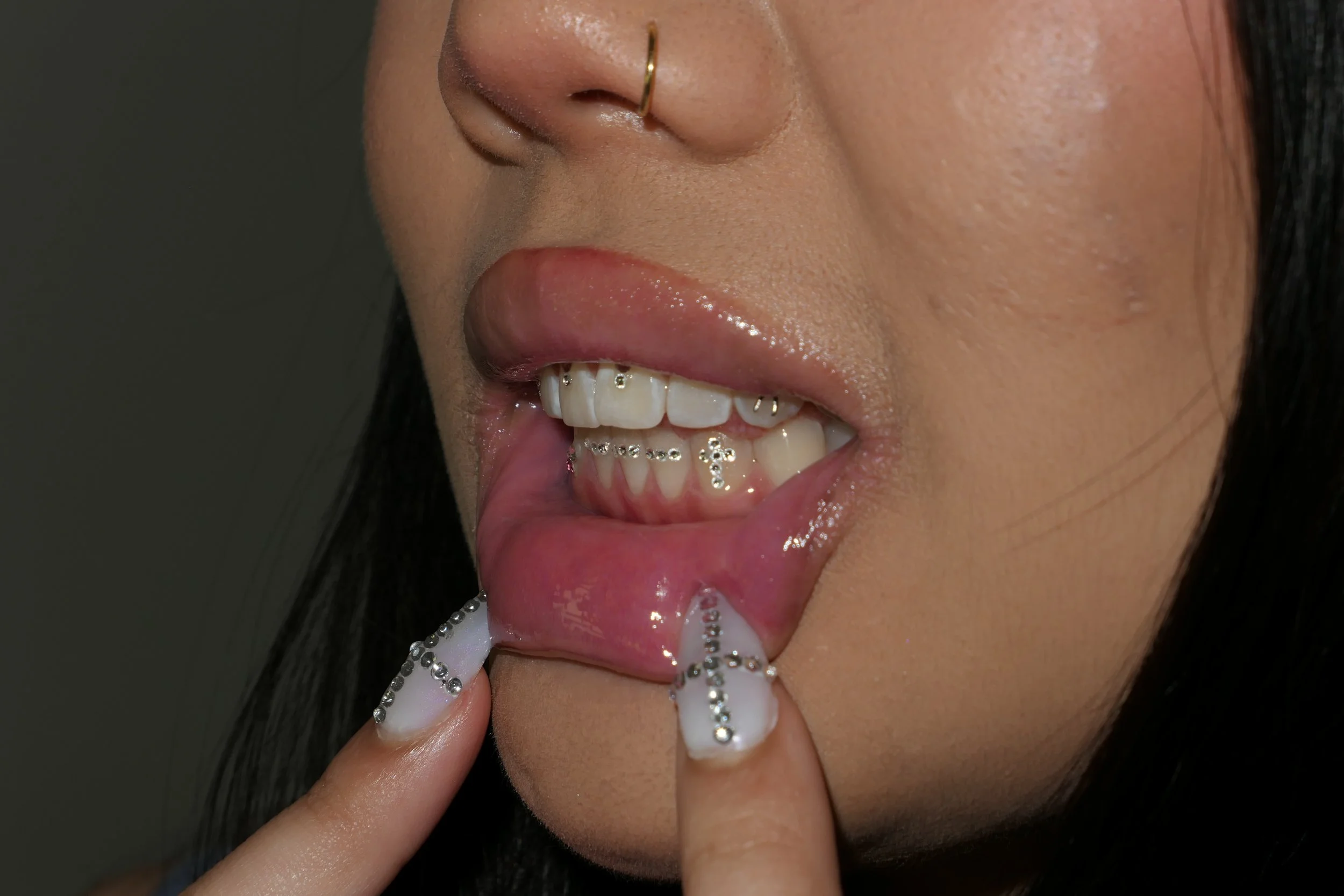

Most tooth gem training teaches enamel as if it is a flat, uniform surface. Etch for 15 seconds, bond, cure, done. But enamel is a living tissue that varies dramatically from person to person, tooth to tooth, and even day to day. Understanding this biology is the single most important factor in gem retention.
What Enamel Actually Is
Tooth enamel is the hardest substance in the human body — harder than bone. It is composed primarily of hydroxyapatite crystals arranged in rod-like structures called enamel prisms. These prisms create the microscopic surface texture that adhesives bond to during gem application.
When we etch enamel with phosphoric acid, we are selectively dissolving portions of these prisms to create micro-pores. The bonding agent then flows into these micro-pores and hardens, creating a mechanical interlock between the adhesive and the enamel.
Why Standard Etch Times Are Oversimplified
The "etch for 15 seconds" instruction assumes enamel is in a neutral state. But enamel condition varies based on multiple factors:
Saliva pH
Saliva pH is the single biggest variable most technicians never assess. Normal saliva pH ranges from 6.2 to 7.6. Acidic saliva (below 6.5) means the enamel surface is already partially demineralised — etching an already-acidic surface can over-etch, creating a chalky, weakened bond surface.
Alkaline saliva (above 7.0) means the enamel may be more resistant to etching, requiring slightly longer etch times for adequate micro-pore creation.
Dietary Acids
What your client ate or drank before the appointment directly affects enamel surface chemistry. Coffee, citrus, soda, wine — all acidic. If your client had an orange juice 30 minutes ago, their enamel is in a temporarily acidic state. Standard etch times applied to pre-acidified enamel risk over-etching.
Medications
Certain medications alter saliva production, saliva pH, or enamel mineralisation:
- Antihistamines and antidepressants — reduce saliva production (dry mouth), concentrating salivary acids on enamel surfaces
- Acid reflux medications — can alter overall oral pH
- High-dose fluoride treatments — increase enamel fluorapatite content, making it more resistant to etching
Congenital Conditions
Some clients have enamel conditions that fundamentally alter bonding behaviour:
- Enamel hypoplasia — underdeveloped enamel with reduced thickness
- Fluorosis — excess fluoride during development alters enamel prism structure
- Amelogenesis imperfecta — genetic condition affecting enamel formation
These conditions require modified bonding protocols or may contraindicate gem application entirely.
The Moisture Problem
Enamel bonding is moisture-sensitive. Dental adhesives are hydrophobic — they repel water. If the enamel surface is contaminated with saliva during the bonding window, the adhesive cannot penetrate the micro-pores effectively, resulting in a weak bond.
Proper moisture control through isolation (cotton rolls, cheek retractors, or dental dams) is not optional — it is essential. Even a thin saliva film between etching and bonding can reduce bond strength by 50% or more.
What This Means for Your Practice
Understanding enamel biology transforms how you approach every appointment:
- You learn to assess before you etch — not just apply a standard protocol blindly
- You can explain failures — when a gem falls off, you can identify the biological cause and prevent recurrence
- You screen for risk factors — medications, diet, dental history — before starting
- You build client trust — demonstrating knowledge that most technicians do not have
This article teaches the WHAT. Our training programs teach the HOW — including clinical assessment techniques, modified bonding protocols, and candidacy screening frameworks.
Explore Training ProgramsContinue learning with our article on the 5 most common bonding mistakes, or download our free retention guide for a printable pre-application checklist.