Everything You Need to Know
Everything You Need to Know
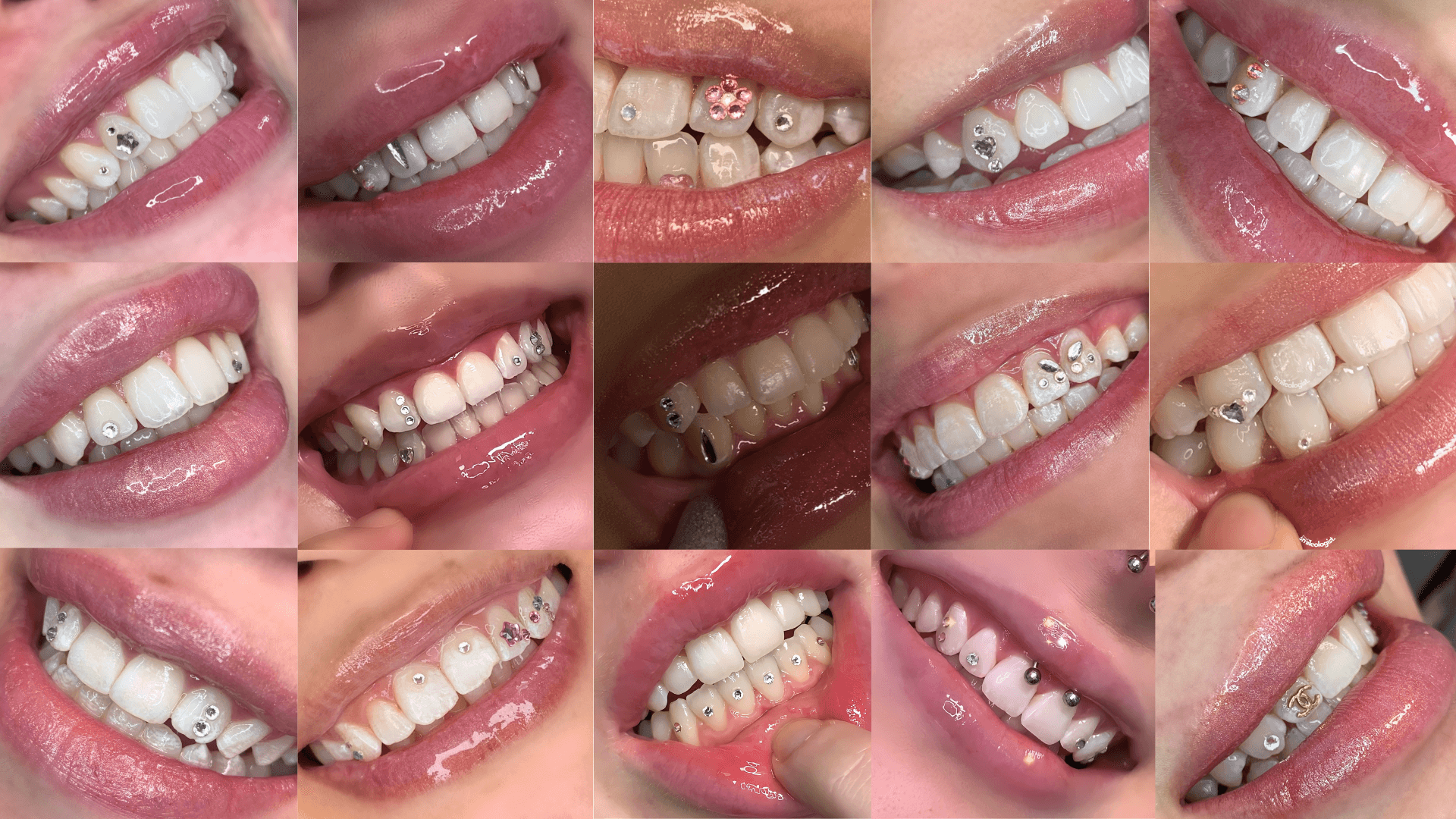
Tooth gems are semi-permanent jewels bonded to your tooth enamel using dental-grade adhesive. They include Swarovski crystals, opalite charms, and 18K gold pieces. The process is painless, requires no drilling, and can last from 1 month to over 2 years.
When applied by a qualified professional using dental-grade materials, tooth gems are completely safe. No drilling is required — the gem is bonded directly to the enamel surface using the same adhesive techniques used in general dentistry. At The Gemist Hub, every application is performed by an AHPRA-registered Oral Health Therapist with a Bachelor of Oral Health from the University of Sydney.
Swarovski crystals typically last 1 month to 2 years, while 18K gold charms can last 6 months to over 2 years. Longevity depends on your dental health, eating habits, oral hygiene routine, and the quality of the bonding technique. Professional application with proper dental-grade materials gives you the best chance of long-lasting results.
The application process takes approximately 15-30 minutes. Your tooth is cleaned and isolated. We then acid etch the enamel surface, apply a bonding agent, place the gem with light-cured composite resin, and cure it with a dental-grade LED light. The same materials and techniques are used for orthodontic brackets in general dentistry.
No. The application is completely painless. There is no drilling, no injections, and no anaesthesia required. Most clients describe the process as comfortable — you will feel some gentle pressure during placement but nothing painful.
When applied and removed correctly by a dental professional, tooth gems cause no damage to your enamel. The bonding process is the same as placing orthodontic brackets, which dentists routinely apply and remove without permanent enamel damage. DIY kits and untrained technicians are where damage occurs.
Tooth gems should ONLY be removed by a dental professional. Do not attempt removal at home as improper technique can damage your enamel. A dental professional will gently debond the gem using the appropriate instruments and polish the tooth surface to restore its natural smoothness.
The most popular placement is the upper canine (the third tooth from centre) for maximum visibility when smiling. Upper central incisors (front teeth) and lateral incisors are also common. During your consultation, we will discuss placement options based on your smile line, tooth alignment, and aesthetic preferences.
Absolutely. During your consultation, we will discuss your preferred placement and recommend options based on your smile line and tooth condition. Some teeth are better candidates than others depending on alignment, existing dental work, and bite pattern. We will always explain why certain placements work better for your specific smile.
We offer Swarovski crystals (clear and coloured), opalite stones (iridescent, milky finish), and 18K gold charms (stars, hearts, butterflies, initials, and custom designs). Each material has different aesthetics and longevity characteristics. Swarovski crystals are the most popular choice for a subtle, diamond-like sparkle.
There is no strict limit — it depends on your dental health, tooth alignment, and aesthetic preferences. Single gems are most popular, but clusters, chains, and multi-tooth designs are increasingly requested. During consultation, we will discuss placement options and recommend what works best for your smile.
If you have traditional metal or ceramic braces, we recommend waiting until they are removed before getting a tooth gem. If you wear Invisalign or removable aligners, a tooth gem can be applied, but you may need a new aligner tray made to accommodate the gem. We will assess your situation during consultation.
Tooth gems can be applied to crowns, veneers, and teeth with fillings in most cases, but the bonding may behave differently on these surfaces compared to natural enamel. We assess each case individually during consultation to determine suitability and set realistic expectations about longevity.
Professional application uses dental-grade materials (BIS-GMA bonding agent, light-cured composite resin) applied by a trained dental professional with proper infection control. DIY kits typically use non-dental adhesives that can damage enamel, harbour bacteria, and fail prematurely. The risk of enamel damage, infection, and ingestion is significantly higher with DIY application.
Absolutely. Tooth gems are for everyone. We see an increasing number of male clients choosing subtle single crystals or gold charms. Tooth gems are a unisex accessory — there is no gender requirement. Popular choices for men include small Swarovski crystals and 18K gold designs.
A professionally applied tooth gem with proper dental-grade adhesive typically lasts 6 months to 2 years. Some gems last even longer. If your gem does come off, it can be safely reapplied. Common reasons for premature loss include biting directly on the gem, poor oral hygiene, and consuming very hard or sticky foods.
For the first 24 hours, avoid very hard foods (nuts, ice, hard candy), sticky foods (toffee, caramel, chewing gum), and biting directly on the gem. After the initial 24 hours, you can resume your normal diet but continue to avoid biting hard objects directly on the gem. We provide a detailed aftercare card at your appointment.
Yes. Continue brushing twice daily as normal. Use a soft-bristled toothbrush and be gentle when brushing over the gem. Do not use an electric toothbrush directly on the gem — manual brushing around the gem area is recommended. Flossing should continue as normal.
Yes, you can eat normally after the first 24 hours. The main things to avoid are biting hard objects directly on the gem (ice, nuts, pen caps) and very sticky foods that could pull at the gem. Most clients find that after a day or two, they forget the gem is even there.
If your tooth gem falls off, keep it safe and contact us to arrange reapplication. Do not attempt to reattach it yourself with household adhesive — this can damage your enamel and is not safe. If you accidentally swallow the gem, it will pass through your system naturally and is not a medical emergency.
Yes, you can continue using mouthwash as normal. Alcohol-free mouthwash is recommended as it is gentler on the bonding material. Avoid using whitening mouthwashes directly after application — wait at least 48 hours.
A properly applied tooth gem has a sealed bond with no gaps between the gem and the tooth surface. Food should not get trapped underneath. If you notice food accumulating around the edges, contact us for a check-up — it may indicate the bond needs attention.
Maintain good oral hygiene (brush twice daily, floss daily), attend regular dental check-ups, avoid biting hard objects directly on the gem, and avoid using your teeth as tools. With proper care, your gem can last well over a year. We offer complimentary check-ups if you ever have concerns about your gem.
Professional teeth whitening is a cosmetic dental treatment performed by registered dental practitioners using dental-grade whitening formulas containing up to 44% hydrogen peroxide — over 7x stronger than cosmetic-grade products (which are capped at 6%). The treatment involves applying the whitening gel to your teeth and activating it with a specialised LED light for accelerated results.
Cosmetic teeth whitening uses low-concentration formulas (up to 6% hydrogen peroxide) that anyone can legally apply. Professional whitening, performed by registered dental practitioners, uses dental-grade formulas up to 44% — over 7x stronger — for dramatically better results in a single session. The difference in results is visible immediately.
A professional whitening session typically takes 60-90 minutes. This includes a pre-treatment assessment, the whitening application (usually 3-4 cycles of 15 minutes each), and a post-treatment review. Most clients see results of 2-8 shades whiter in a single session.
Professional teeth whitening performed by a registered dental practitioner is safe. The products we use are TGA-approved and dental-grade. Some temporary tooth sensitivity and minor gum irritation are normal side effects that resolve within 24-48 hours. We perform a thorough assessment to ensure you are a suitable candidate before treatment.
Professional whitening with properly formulated products does not damage healthy enamel. The hydrogen peroxide penetrates the enamel to break down stain molecules within the tooth structure without removing enamel material. Overuse of whitening products or use of abrasive whitening toothpastes can cause enamel wear — which is why professional supervision matters.
Most clients achieve 2-8 shades improvement in a single session. Results vary depending on the type of staining, your natural tooth colour, and your dental history. We use a shade guide before and after treatment so you can see the measurable difference. Intrinsic staining (e.g. from tetracycline antibiotics) may require multiple sessions.
Professional whitening can be safely repeated every 6-12 months. We recommend a booster appointment 4-6 weeks after your initial treatment for optimal results. The complimentary take-home kit helps maintain your results between visits. Heavy coffee and tea drinkers may benefit from more frequent maintenance.
Results typically last 6-12 months depending on your diet and oral care routine. Regular consumption of coffee, tea, red wine, curries, and tobacco will accelerate staining. Using a straw for cold beverages and rinsing after consuming staining foods helps extend results significantly.
Several factors affect results: the type and severity of staining (extrinsic vs intrinsic), your natural tooth colour (genetics), diet habits (coffee, tea, red wine), smoking, certain medications, and the health of your enamel. We perform a thorough assessment during consultation to set realistic expectations.
Some temporary sensitivity is normal and typically resolves within 24-48 hours. We use desensitising agents during treatment and provide a sensitivity management protocol. If you have pre-existing sensitivity, inform us during your consultation — we may adjust the treatment protocol to minimise discomfort.
Whitening only works on natural tooth structure — fillings, crowns, veneers, and bridges will not change colour. If you have visible restorations on your front teeth, we will discuss this during consultation, as whitening may create a colour mismatch that needs to be addressed with your general dentist afterwards.
Charcoal toothpaste removes surface stains through abrasion, making teeth appear slightly brighter temporarily. However, it does not change the intrinsic colour of your teeth and can actually damage enamel with prolonged use. Professional whitening penetrates the tooth structure to break down stain molecules — a fundamentally different and more effective mechanism.
Yes, but order matters. We recommend whitening first, waiting 2 weeks for the colour to stabilise, and then placing the gem. This ensures the gem is matched to your final tooth colour. If you whiten after gem placement, the area under the gem will remain the original shade.
Nhi is an AHPRA-registered Oral Health Therapist (OHT) with a Bachelor of Oral Health from the University of Sydney. She is a member of the Australian Dental Association (ADA), holds current CPR and infection control certifications, and has a national police clearance. She is qualified to perform intra-oral procedures including tooth gem application and professional teeth whitening under Australian dental regulations.
In Australia, performing procedures inside the mouth is regulated under the Health Practitioner Regulation National Law. While tooth gem application occupies a grey area, using dental-grade bonding agents (BIS-GMA composites, etchants) is a dental procedure. At The Gemist Hub, we operate under full dental regulation with an AHPRA-registered practitioner, proper infection control, and TGA-compliant materials.
We follow hospital-grade infection control protocols including autoclaved instruments, single-use disposable items (gloves, applicators, suction tips), surface disinfection between clients, hand hygiene protocols, and proper PPE. Our sterilisation procedures align with Australian dental infection control guidelines (ADA/NHMRC standards).
We use dental-grade, TGA-compliant materials: 37% phosphoric acid etchant, BIS-GMA bonding agent, light-cured composite resin, and a dental-grade LED curing light. These are the same materials used in general dental practices for orthodontic bracket placement, fillings, and other restorative procedures.
Absolutely. Nhi's AHPRA registration is publicly verifiable on the AHPRA register. Her registration number, qualifications, and any conditions are available for you to verify independently. We are transparent about our credentials because we believe accountability builds trust.
In the rare event of any complication, you are treated by a registered dental professional who can assess and manage the situation clinically. We carry professional indemnity insurance and follow established clinical protocols. If a gem needs removal, we can do so safely. For any dental concerns beyond our scope, we refer to your general dentist immediately.
You can book online through our website, send us a DM on Instagram (@thegemisthub), or contact us directly. We recommend booking at least 1-2 weeks in advance as appointment slots fill quickly, especially on weekends.
The Gemist Hub operates in two locations: Adelaide (Parafield Gardens, SA) and Sydney (Canley Vale, NSW). Both clinics are equipped with full dental-grade equipment and maintain the same high standards of care.
Pricing varies depending on the type of gem and design complexity. Single Swarovski crystals start from $80-$150, while 18K gold charms are $200-$400+. Custom designs, clusters, and chains are priced individually. We provide transparent pricing during your consultation with no hidden fees.
Professional whitening sessions range from $250-$500 depending on the treatment package. All sessions include a pre-treatment assessment, the in-chair whitening treatment, and a complimentary take-home maintenance kit. Package deals are available when combining whitening with tooth gem application.
Yes. Every new client receives a consultation (included in the appointment time) where we assess your dental health, discuss your options, and ensure you are a suitable candidate. This is a clinical assessment, not just a menu reading — we check your enamel condition, bite pattern, and oral health before proceeding.
A single tooth gem appointment takes approximately 30-45 minutes including consultation. Professional teeth whitening takes 60-90 minutes. Combined appointments (whitening + gem) take approximately 2 hours. We never rush — your appointment includes thorough preparation, application, and aftercare briefing.
Yes, you are welcome to bring a friend or family member to your appointment. Many clients find it reassuring to have someone with them, especially for their first visit. Your companion is welcome to wait in the reception area or observe the procedure.
We accept cash, card (Visa, Mastercard, EFTPOS), and bank transfer. Payment is required at the time of service. For larger treatments, we can discuss payment options during your consultation.
We require at least 24 hours notice for cancellations or rescheduling. Late cancellations or no-shows may incur a fee as we reserve time specifically for your appointment. We understand that emergencies happen — please contact us as soon as possible if your plans change.