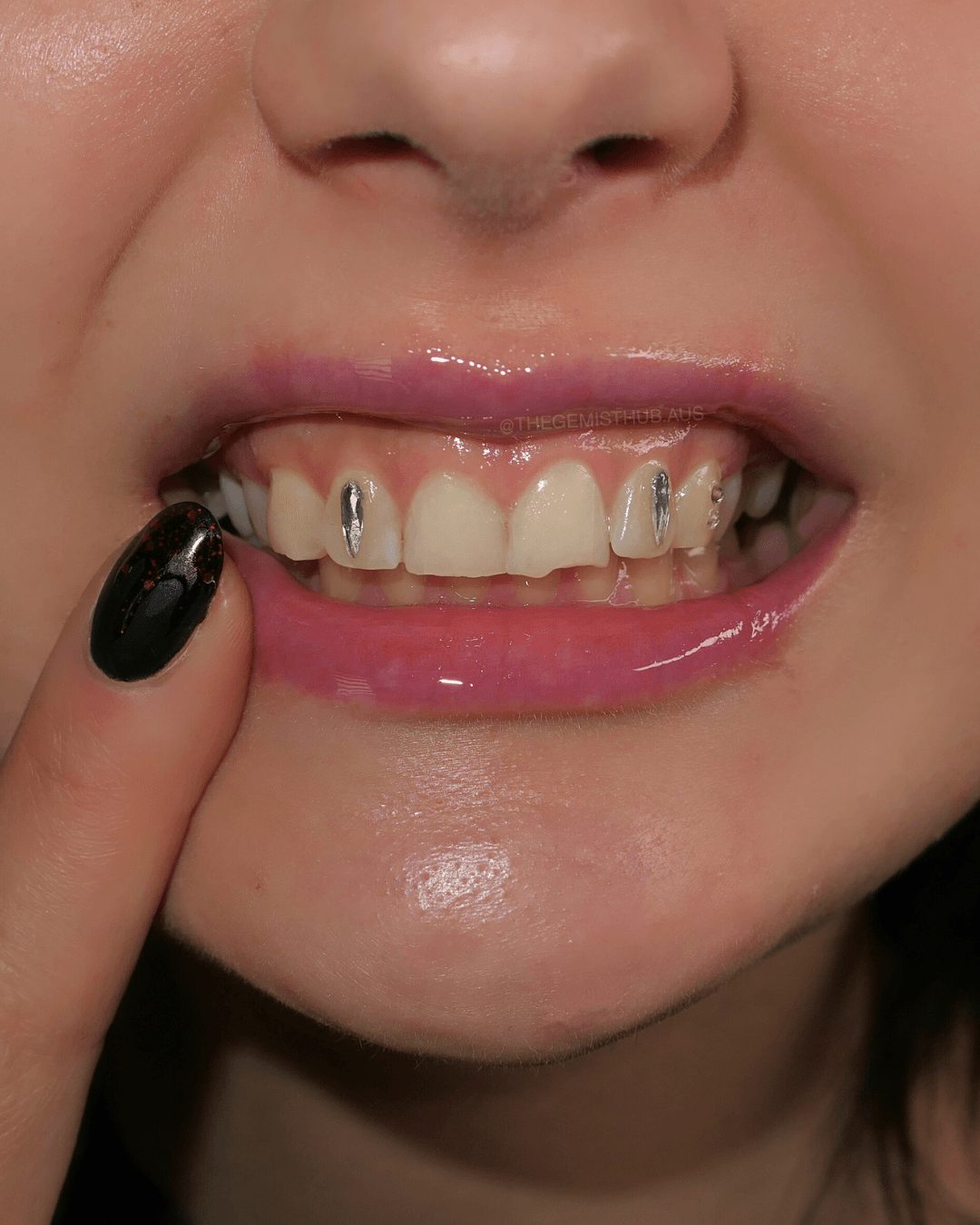

When clients ask me how tooth gems stay attached for months or even years, I explain that we use the same professional dental bonding technique that has been trusted in dentistry for decades. This isn't superglue or fashion adhesive—it's a sophisticated chemical process that creates a permanent bond with your natural tooth enamel.
As an AHPRA-registered Oral Health Therapist who has placed tooth gems on over 600 clients at The Gemist Hub, I've seen firsthand how proper dental bonding technique determines whether a gem lasts two weeks or two years. Let me break down the science behind the process.
What Is Dental Bonding?
Dental bonding is a technique where composite resin material is chemically bonded to tooth enamel. It's the same process dentists use to attach orthodontic brackets, repair chipped teeth, and fill cavities. When we apply a tooth gem, we're using clinical-grade bonding materials and following the exact protocols taught in dental schools.
At The Gemist Hub in Parafield Gardens and Canley Vale, we use the same bonding systems that orthodontists rely on to keep braces secure for 18-24 months. If it can hold metal brackets through years of chewing forces, it can certainly hold a lightweight Swarovski crystal.
"The bond between dental composite and etched enamel is stronger than the enamel itself. When a tooth gem is removed, the enamel remains intact—it's the composite layer that's polished away."
The Four-Step Bonding Process
Professional tooth gem application follows a precise clinical protocol. Here's what happens during your appointment:
- Clean: The tooth surface is polished with pumice to remove plaque, debris, and pellicle (the protein layer that naturally forms on teeth). This creates a pristine surface for bonding.
- Etch: A phosphoric acid gel (typically 37% concentration) is applied for 15-30 seconds. This creates microscopic irregularities in the enamel surface, increasing surface area by up to 2000%.
- Bond: A thin layer of dental adhesive (liquid resin) is painted onto the etched enamel. This penetrates the microscopic pores created during etching.
- Cure: The gem is placed in a small amount of composite resin, then exposed to a dental curing light (LED or halogen, 400-500nm wavelength). The light activates photoinitiators in the resin, causing it to harden in seconds.
Each step builds on the previous one. Skip the etching, and the bond will fail within days. Rush the curing, and the resin won't fully polymerise. This is why tooth gems should only be applied by trained dental professionals who understand the chemistry involved.
The Materials: Clinical-Grade Chemistry
We don't use craft glue or beauty adhesives at The Gemist Hub. Our bonding materials are the same ones you'd find in an orthodontic practice:
- Phosphoric acid etchant: Medical-grade 37% phosphoric acid gel that selectively dissolves enamel prisms without damaging the tooth structure.
- Dental adhesive: Light-cured resin containing BIS-GMA (bisphenol A-glycidyl methacrylate), HEMA (hydroxyethyl methacrylate), and photoinitiators. This penetrates etched enamel and bonds at a molecular level.
- Composite resin: The same flowable composite used for dental fillings, formulated to bond with both the adhesive layer and the gem's flat back.
These materials have been refined over 60+ years of dental research. They're biocompatible, stable in the oral environment, and designed to withstand the extreme conditions inside your mouth—temperature fluctuations, pH changes, constant moisture, and chewing forces.
Get Your Tooth Gem Applied by a Dental Professional
Experience the difference that clinical-grade bonding makes. Book your appointment at The Gemist Hub in Adelaide or Sydney.
Book NowWhy This Is NOT Superglue
I've had clients come in with gems that fell off within a week because they were applied with nail glue or beauty adhesive. Here's the critical difference:
- Superglue (cyanoacrylate): Creates a mechanical bond by forming a thin film between two surfaces. It sits ON TOP of the enamel and relies on surface tension. Saliva and oral bacteria quickly break down this film.
- Dental bonding: Creates a chemical bond by penetrating INTO the etched enamel. The resin flows into microscopic pores and hardens, creating a lock-and-key structure. This is called micromechanical retention.
Think of it like the difference between sticky tape (sits on surface, peels off easily) and a jigsaw puzzle piece (interlocks, stays put). Dental bonding is the jigsaw approach—it becomes part of the tooth structure rather than just sitting on top.
How UV Curing Works
The dental curing light isn't just a fancy torch—it triggers a specific chemical reaction. Here's the science:
Dental composite contains photoinitiators (usually camphorquinone) that are sensitive to blue light at 400-500nm wavelength. When exposed to this light, the photoinitiators split into free radicals, which trigger a chain reaction called polymerisation. Long chains of resin molecules link together, transforming the soft paste into a hardened polymer in 20-40 seconds.
At The Gemist Hub, we use professional-grade LED curing lights that deliver consistent light intensity across the entire bonding site. This ensures complete polymerisation—which means maximum bond strength and longevity for your tooth gem.
Bond Strength: The Numbers
Research published in dental journals shows that properly executed enamel bonding achieves shear bond strength of 20-25 megapascals (MPa). To put that in perspective:
- Normal chewing force: 5-10 MPa
- Enamel-to-dentin junction strength: 15-20 MPa
- Dental bonding strength: 20-25 MPa
The bond is literally stronger than your natural tooth structure. This is why when we remove a tooth gem professionally, we polish away the composite resin rather than trying to "pop" the gem off—forcing it could potentially fracture the enamel itself.
Why Education Matters
My dental training at the University of Sydney included extensive coursework in biomaterials, adhesive dentistry, and bonding protocols. When I apply a tooth gem, I'm drawing on the same knowledge I use for composite fillings and orthodontic attachments. This clinical foundation is what separates a professional application from a DIY attempt.
At The Gemist Hub, every tooth gem is applied following the same evidence-based protocol I learned during my degree. It's why our clients routinely report their gems lasting 6-12 months or longer—and why we have over 100 five-star Google reviews from clients who trust our technique.
If you're considering a tooth gem, make sure it's applied by someone who understands the chemistry. Your smile deserves professional care. You can learn more about our process on our tooth gems service page, or explore our aftercare guide to understand how to maintain your gem once it's bonded.
Ready to experience the difference that clinical-grade dental bonding makes? Book your appointment at The Gemist Hub in Adelaide or Sydney, and I'll walk you through every step of the process.