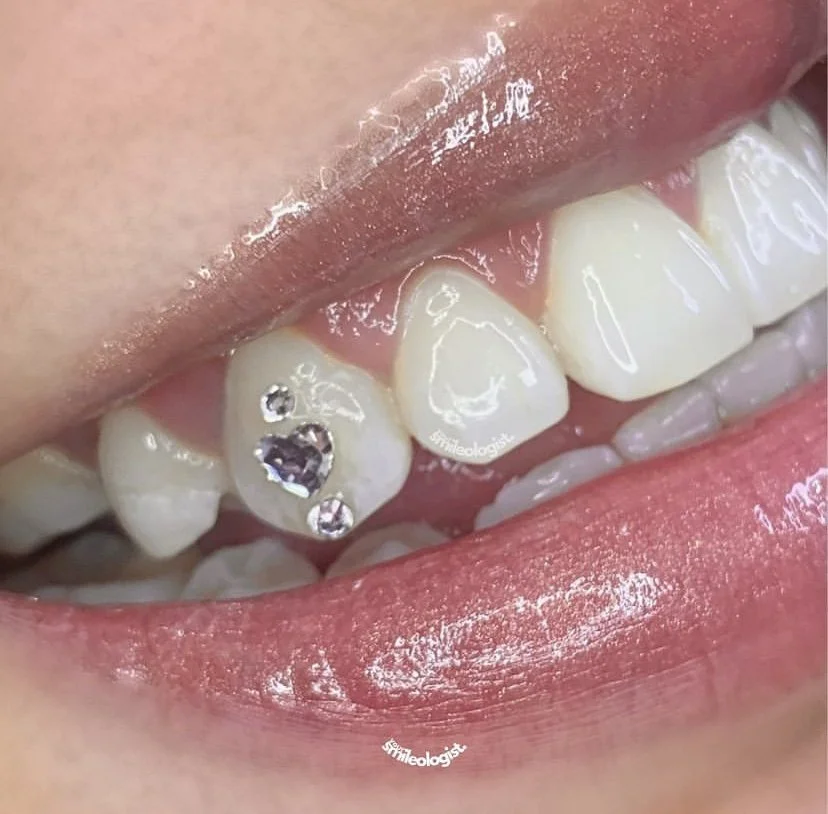

Scroll through TikTok or browse Amazon, and you'll find dozens of DIY tooth gem kits promising salon-quality results at a fraction of the cost. The marketing is compelling: "Apply at home in minutes!" "No dental visit needed!" "Save hundreds of dollars!" But as an AHPRA-registered oral health therapist who has treated over 600 clients and witnessed the aftermath of failed DIY attempts, I need to be brutally honest with you.
These kits are a dangerous gamble with your oral health. The risks far outweigh any perceived savings, and the damage I've seen in my Parafield Gardens and Canley Vale clinics is both preventable and heartbreaking. Let me explain exactly what you're risking when you choose a DIY kit over professional application.
What's Actually in These DIY Kits?
Most at-home tooth gem kits contain components that look professional at first glance, but a closer examination reveals serious problems. Here's what you typically receive:
- Non-dental adhesive — Often labelled as "cosmetic bonding glue" or "dental cement," but these are not the same medical-grade adhesives used in dental clinics. They're formulated for temporary hold, not long-term oral use.
- Questionable crystals — While some kits claim to include "genuine Swarovski crystals," there's no verification or certification. Many contain cheap acrylic or glass substitutes that can chip, discolour, or harbour bacteria.
- Etching solution or "prep liquid" — This is possibly the most dangerous component. These solutions are meant to roughen tooth enamel for better adhesion, but without proper training, users apply them incorrectly, causing permanent enamel damage.
- Application tools — Usually a basic tweezer and applicator stick, neither of which is sterilised or designed for safe oral use.
- Minimal or misleading instructions — Often just a card or basic PDF with no guidance on tooth preparation, placement technique, or what to do if something goes wrong.
The fundamental problem is this: these kits are designed to be sold profitably at retail prices (usually $15-$40), which means every component is manufactured as cheaply as possible. You're not getting professional-grade materials — you're getting convincing-looking substitutes.
"In my years of practice, I've never seen a successful long-term result from a DIY tooth gem kit. What I have seen is enamel erosion, gum irritation, infections, and gems that fall off within days. The money you 'save' is quickly spent fixing the damage."
The Specific Risks: What Can Go Wrong
Let me walk you through the real, documented risks of DIY tooth gem application. These aren't hypothetical concerns — they're complications I've personally treated in clients who tried at-home kits first.
Permanent Enamel Damage: The etching solution in DIY kits is designed to demineralise your tooth enamel to create a rough surface for bonding. In professional hands, this is carefully controlled and immediately followed by proper bonding and remineralisation. At home, users often apply too much, leave it on too long, or don't neutralise it properly. This causes irreversible enamel erosion — white spots, sensitivity, and increased cavity risk that lasts for life.
I've treated clients who developed permanent white scarring around where they attempted DIY application. This damage cannot be reversed with brushing or fluoride treatments. It requires cosmetic dental work to mask, which costs far more than professional gem placement would have.
Infection Risk from Non-Sterile Tools: Professional dental tools are either single-use disposable or rigorously sterilised in autoclaves that kill all bacteria, viruses, and fungi. The tweezers and applicators in DIY kits come in basic packaging with no sterilisation. The moment you open the package and touch the tools, they're contaminated with bacteria from your hands and environment.
Placing these contaminated tools in your mouth, especially on a tooth surface that's been etched (creating microscopic openings in the enamel), is an invitation for infection. I've seen cases of localised gum infections that required antibiotic treatment — all from tools that were never sterile to begin with.
Ingestion and Choking Hazard: Without proper technique and professional tools, DIY applicators frequently drop gems during placement. If you're working in front of a bathroom mirror with your mouth open, that gem can easily be aspirated (breathed into your airway) or swallowed. While a small crystal will usually pass through your digestive system, aspiration can cause serious lung complications requiring medical intervention.
Professional application at clinics like The Gemist Hub uses dental dams and proper patient positioning to eliminate this risk entirely. We work under clinical lighting with magnification and professional technique to ensure the gem goes exactly where it should.
Allergic Reactions to Non-Dental Materials: The adhesives in DIY kits are not held to the same biocompatibility standards as dental materials. Many contain acrylates, cyanoacrylates (superglue family), or other chemicals that can trigger allergic reactions ranging from mild irritation to severe contact dermatitis of the gums and oral tissues.
Professional dental adhesives used in clinics are medical-grade, tested for oral biocompatibility, and approved by the Therapeutic Goods Administration (TGA) in Australia. DIY kit adhesives often have no such certification or testing.
Don't Risk Your Smile on Cheap DIY Kits
Get your tooth gem applied safely by a qualified oral health therapist. Book your professional appointment at The Gemist Hub — Parafield Gardens or Canley Vale.
Book Professional ApplicationWhy "Nail Glue" and Superglue Are NOT Dental Adhesives
This point deserves its own section because it's shockingly common. Social media videos and online forums suggest using nail glue, eyelash glue, or even household superglue to attach tooth gems. This is categorically dangerous and completely inappropriate.
Here's why these adhesives are not interchangeable with dental bonding materials:
- Chemical composition — Nail glue and superglue are cyanoacrylate-based adhesives formulated for external use on non-living surfaces. They are not biocompatible with oral tissues and release toxic byproducts when they cure in a moist environment like your mouth.
- pH levels — These adhesives are acidic and can chemically burn soft tissue (gums, tongue, cheeks). Professional dental adhesives are pH-balanced for oral use.
- Moisture sensitivity — Superglue does not bond well in wet environments. It will fail quickly in your saliva-filled mouth, causing the gem to detach and potentially be swallowed.
- Toxic exposure — Cyanoacrylate releases formaldehyde as it cures. Continuous exposure to this chemical in your mouth increases your risk of irritation, allergic reactions, and long-term cellular damage.
- No TGA approval — These products are not approved for oral or medical use in Australia. Using them in your mouth voids any product safety guarantees.
Professional dental adhesives like those we use at The Gemist Hub are specifically formulated for long-term bonding to tooth enamel in a moist oral environment. They're tested for biocompatibility, release no toxic byproducts, and create bonds that last months to years rather than days. There is no substitute for these materials — full stop.
Real Cases: The Damage I've Seen
While I would never breach client confidentiality by naming individuals, I can share the patterns I've observed in my practice. Over the past two years alone, I've treated more than a dozen clients who came to me after DIY attempts went wrong.
Common presentations include:
- White scarring in a circular pattern where etching solution was over-applied
- Gum recession and inflammation around the attempted placement site
- Persistent sensitivity to hot and cold from enamel damage
- Stained or discoloured areas where low-quality crystals were temporarily bonded
- Gems that fell off within 24-48 hours, leaving adhesive residue that required professional removal
In nearly every case, the cost to repair the damage exceeded what professional application would have cost in the first place. One client required composite bonding to mask enamel scarring — a $300+ procedure to fix a problem caused by a $25 DIY kit.
The emotional toll is equally significant. These clients came to me embarrassed, frustrated, and worried they'd permanently damaged their teeth. The stress and regret could have been entirely avoided with professional application from the start.
The False Economy: Why DIY Actually Costs More
Let's talk about the financial reality. A typical DIY tooth gem kit costs $15-$40 on Amazon or eBay. Professional application at The Gemist Hub starts at $99 for a single Swarovski crystal gem, including consultation, professional placement, and aftercare support.
On the surface, DIY looks cheaper. But here's what that calculation misses:
- Failure rate — DIY gems typically fall off within days to weeks, if they bond at all. You've wasted $25+ and still need professional application.
- Repair costs — Enamel damage from improper etching can require composite bonding ($200-$400), fluoride treatments, or even root canal therapy if the damage reaches the pulp.
- Replacement materials — When the DIY gem falls off, you need to buy another kit or finally book a professional appointment. Now you've paid twice.
- Time cost — Multiple failed attempts, researching fixes online, emergency dental visits if complications arise — your time has value.
- Health insurance — Damage caused by DIY cosmetic procedures is rarely covered by private health insurance, leaving you with full out-of-pocket costs for repairs.
When you factor in these hidden costs, professional application is not only safer — it's actually more economical. You pay once, it's done correctly, and you enjoy months to years of wear without complications.
What Amazon and TikTok Kits Get Wrong
The marketing for DIY tooth gem kits relies on carefully edited videos and strategic omissions. Here's what these platforms don't show you:
Instagram and TikTok Videos: That perfectly placed gem in the 15-second video? It's often filmed immediately after application, before the person has eaten, brushed, or moved their mouth normally. You don't see the follow-up video three days later when it's fallen off. The algorithm doesn't promote failure stories — only the highlight reel.
Amazon Reviews: The 5-star reviews are often from people who applied the gem an hour ago and think it looks good. Check back three weeks later and ask if it's still there. The negative reviews warning about enamel damage and quick failure are buried pages deep, while promotional reviews are pushed to the top.
Influencer Promotions: Many social media influencers are paid to promote these kits or receive affiliate commissions from sales. They have no dental training, no responsibility for outcomes, and no follow-up accountability when things go wrong.
What these platforms also fail to explain is the technique required for safe application. Professional tooth gem placement isn't just "stick it on and you're done." It involves:
- Tooth selection based on anatomy and bite pattern
- Professional cleaning and isolation of the tooth
- Controlled etching with precise timing
- Application of bonding primer and adhesive in correct sequence
- Proper curing with dental-grade light equipment
- Removal of excess adhesive and bite verification
None of this can be adequately taught through a 60-second TikTok or a two-paragraph instruction card. It requires years of dental education and hands-on training — exactly what I received through my university qualification and clinical practice.
The Legal and Regulatory Gap
Here's a truth that should concern anyone considering DIY tooth gems: there is currently minimal regulation of these kits in Australia. They're sold as "cosmetic accessories" rather than dental devices, which means they bypass the strict TGA approval process that governs actual dental products.
This regulatory gap means:
- No requirement to prove safety or efficacy before sale
- No testing for biocompatibility with oral tissues
- No quality control on adhesive formulations
- No verification that "Swarovski crystals" are genuine
- No liability for the seller if you damage your teeth
When you purchase a DIY kit, you're accepting 100% of the risk with no recourse if something goes wrong. The seller has no accountability, and your health insurance likely won't cover damage from cosmetic DIY procedures.
In contrast, when you book a professional tooth gem appointment at a registered clinic like The Gemist Hub, you're protected by Australian health regulations, professional indemnity insurance, and my registration with AHPRA. If any complication arises, there's a clear path for resolution and support.
When to Choose Professional Application
The answer is simple: always. There is no scenario where DIY application is the better choice. Whether you want a single subtle crystal or a full constellation of gems, professional application offers:
- Safety — Medical-grade materials, sterile technique, proper tooth preparation
- Longevity — Gems that last months to years, not days
- Aesthetics — Perfect placement based on your unique tooth anatomy and smile
- Support — Professional aftercare guidance and follow-up if needed
- Peace of mind — Knowing your oral health isn't at risk
At The Gemist Hub, I've applied over 600 tooth gems with consistent, safe results. My clients leave knowing their gem is secure, their enamel is protected, and they have access to professional support if they ever have questions. That level of confidence and care simply isn't available with a $20 Amazon kit.
Your smile is worth investing in properly. Professional tooth gem application isn't just about aesthetics — it's about protecting your oral health while achieving a look you love. Don't let false savings lure you into risking permanent damage.
If you've been tempted by DIY kits, I understand the appeal. The lower price point is attractive, especially if you're just curious about trying a tooth gem. But having seen the consequences up close, I can tell you with absolute certainty: the risks are not worth it. Choose safety, quality, and professional expertise. Your teeth deserve nothing less.
Ready to get your tooth gem applied the right way? Book your appointment at The Gemist Hub in Parafield Gardens or Canley Vale. As a university-trained, AHPRA-registered oral health therapist with over 100 five-star Google reviews, I'll ensure your experience is safe, comfortable, and delivers results that last. See why hundreds of clients trust us with their smiles — and why not a single one regrets skipping the DIY route.