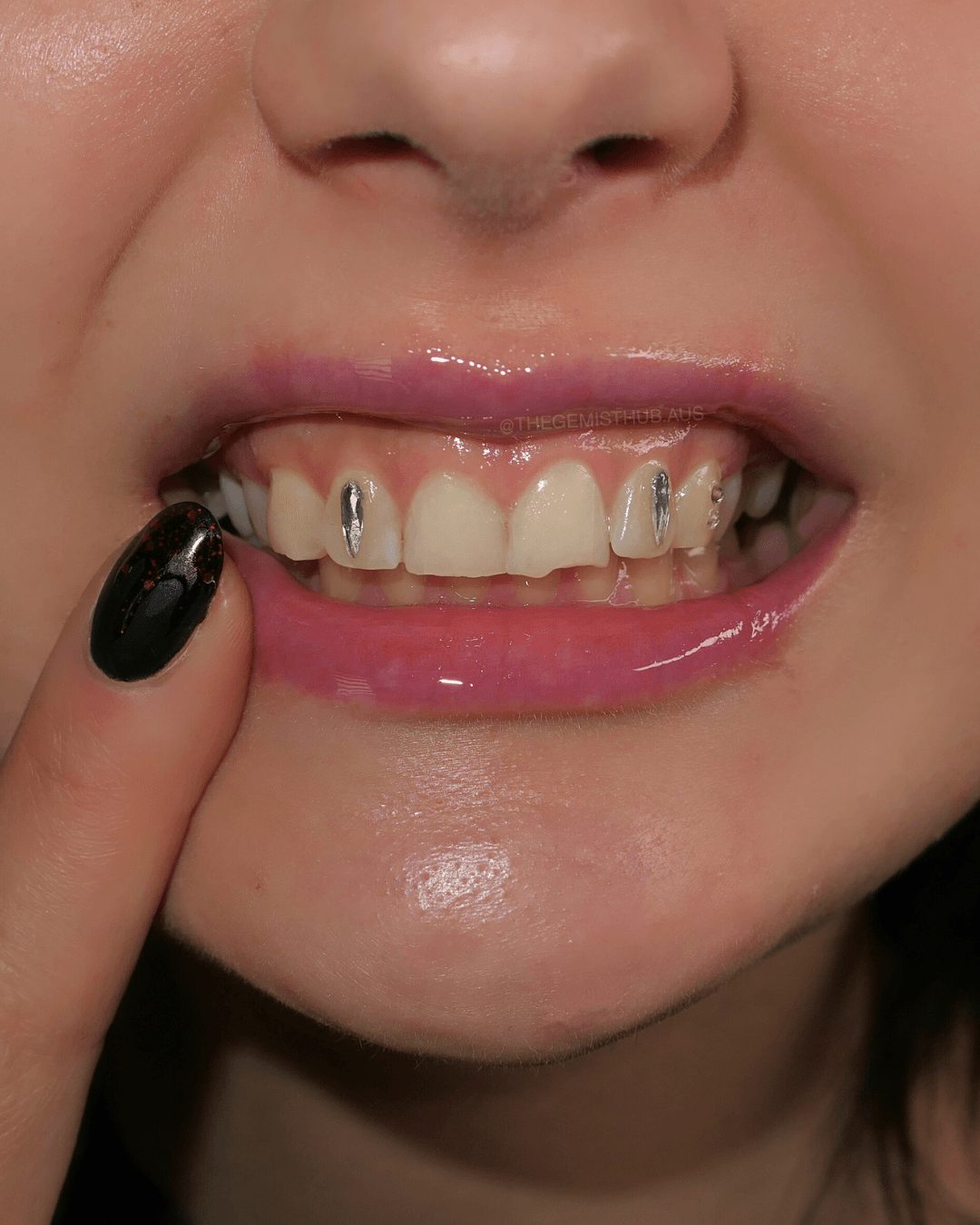

If your tooth gem keeps falling off, you're not alone. But here's what most people don't realise: gem failure often has nothing to do with the gem itself, and everything to do with factors that were never assessed in the first place.
As an oral health therapist registered with AHPRA and a member of the Australian Dental Association, I've applied hundreds of tooth gems across my Adelaide and Sydney clinics. Through working with over 600 clients, I've identified three critical factors that determine whether a gem stays for years or falls off in weeks. And the truth is, most technicians never assess these factors at all.
The Hidden Factor: Saliva Health and Bonding
Your saliva is far more than just moisture in your mouth. It's a complex biological environment that directly affects how well dental adhesives bond to your enamel. When I assess a client for tooth gem application, one of the first things I evaluate is their saliva quality — something that rarely happens at beauty salons or non-dental providers.
Saliva pH varies significantly from person to person. A healthy mouth typically maintains a pH between 6.5 and 7.5, which creates optimal conditions for dental bonding. However, acidic saliva (pH below 6.5) can weaken the adhesive bond that holds your gem in place. This isn't something you can see or feel, but it has a massive impact on gem longevity.
What Causes Acidic Saliva?
Several factors can shift your saliva toward the acidic side of the spectrum. Certain medications, particularly those that cause dry mouth, reduce saliva flow and allow acidity to build up. Medical conditions like acid reflux or diabetes can also alter your oral pH balance. Even your diet plays a role — frequent consumption of acidic drinks like soft drinks, energy drinks, or citrus juices can create an environment where adhesives struggle to maintain their bond.
This is precisely why a proper tooth gem assessment matters. When I work with clients, I take time to understand their medical history, medications, and lifestyle factors. If I identify potential saliva health concerns, we discuss them before application. Sometimes, simple changes like staying better hydrated or timing the application when certain medications aren't being taken can make the difference between a gem that lasts six months and one that lasts two years.
"Most technicians teach application technique without the biological context. But you can't solve gem failure if you don't understand why gems stay in the first place."
High Maintenance vs Low Maintenance Gem Placements
Not all tooth gems are created equal when it comes to maintenance requirements. Some placements are naturally more vulnerable to forces that can dislodge them, while others can truly be "set and forget" for years. Understanding this distinction is crucial, yet it's rarely explained to clients.
The position of your gem matters enormously. Gems placed on the front surface of your upper canines or lateral incisors — away from your bite line — tend to be low maintenance. They're protected from the heavy forces of chewing and aren't subjected to constant friction. These placements often last 18 months to several years with minimal intervention.
However, gems placed closer to the biting edge, on lower teeth, or on surfaces that contact opposing teeth during chewing are inherently higher maintenance. They experience repeated micro-impacts every time you eat, talk, or clench your teeth. This doesn't mean these placements are wrong — it simply means they require more awareness and possibly more frequent check-ins.
Lifestyle and Gem Longevity
Your daily habits also determine whether your gem will be high or low maintenance. If you're someone who grinds their teeth at night (bruxism), even a well-placed gem will face extraordinary forces that can gradually weaken the bond. If you play contact sports, eat particularly hard or crunchy foods regularly, or have habits like biting pens or opening packages with your teeth, your gem placement needs to account for these forces.
This is why I always ask detailed questions during the material selection process. A client who leads a high-impact lifestyle might be better suited to a smaller, flatter gem with a broader bonding surface. Someone with a gentler lifestyle might be able to wear larger, more decorative gems without issue.
Ready for a Professional Assessment?
Book your tooth gem consultation with a dental professional who understands the science behind lasting results.
Book Your ConsultationThe Assessment Gap in Tooth Gem Training
Here's the uncomfortable truth about the tooth gem industry: most training courses focus exclusively on application technique. They teach you how to etch enamel, how to apply adhesive, and how to cure the bond with a UV light. But they rarely teach you why the bond fails.
This creates what I call the "assessment gap" — the difference between knowing how to apply a gem and understanding the biological, mechanical, and lifestyle factors that determine whether it will stay. As someone who completed my training through the University of Sydney and maintains ongoing professional development through the Australian Dental Association, I've learned that successful tooth gem application requires far more than manual skill.
What a Proper Pre-Application Assessment Looks Like
When you come to The Gemist Hub for a tooth gem, you're not just getting a cosmetic procedure. You're receiving a comprehensive dental assessment that includes:
An oral health check to identify any existing conditions that might affect bonding — this includes checking for active decay, enamel defects, or areas of demineralisation. A gem should never be placed on compromised enamel.
A bite analysis to determine which tooth surfaces are subject to heavy contact forces. This helps us select the optimal placement that balances your aesthetic goals with mechanical stability.
A lifestyle discussion to understand your daily habits, diet, oral hygiene routine, and any factors (like sports or teeth grinding) that might affect gem longevity.
A saliva health evaluation to assess pH balance and moisture levels, particularly if you mention dry mouth, medications, or medical conditions that might affect your oral environment.
"The difference between a gem that lasts six months and one that lasts two years often comes down to assessment — not application technique."
Why Dental Professionals Approach Gems Differently
When you choose a dental professional for your tooth gem application, you're accessing a completely different framework of care. My training as an oral health therapist means I understand enamel structure at a microscopic level. I know how dental adhesives interact with tooth surfaces. I recognise the signs of compromised oral health that might not be obvious to someone without dental education.
This knowledge directly translates to better outcomes. I've had clients come to me after experiencing repeated gem failures elsewhere, only to have their gems stay perfectly for 18+ months after we addressed the underlying factors. Often, the solution isn't changing the gem or the adhesive — it's changing the assessment process.
What to Do If Your Gem Keeps Falling Off
If you've experienced multiple gem failures, start by asking yourself these questions: Have you disclosed all your medications and medical conditions to your technician? Have you discussed your diet, particularly consumption of acidic beverages? Does your technician perform an oral health check before application? Do they assess your bite and placement forces?
If the answer to any of these questions is no, you're experiencing the assessment gap. The solution isn't to give up on tooth gems — it's to find a provider who takes a comprehensive approach to application.
When you visit a dental professional for tooth gem services, you're not paying extra for the same service. You're investing in expertise that prevents failures before they happen. You're accessing knowledge about oral biology, materials science, and long-term outcomes that simply isn't taught in weekend beauty courses.
The Bottom Line on Gem Longevity
Tooth gem failure is rarely random. In my experience across hundreds of applications, gems fall off for identifiable, preventable reasons. Saliva health that was never assessed. High-maintenance placements that weren't explained to the client. Lifestyle factors that weren't accounted for in the placement decision.
The good news is that when these factors are properly evaluated and managed, tooth gems can be incredibly durable. I have clients wearing the same gem for over two years without any issues. The difference isn't luck — it's assessment.
If you're tired of experiencing gem failures, or if you're considering your first tooth gem and want it done right the first time, the solution is straightforward: choose a provider who understands not just how to apply gems, but why they stay. Look for someone with dental qualifications, who asks detailed questions about your health and lifestyle, and who takes time to assess your individual oral environment.
Your tooth gem should be a long-lasting enhancement that brings you joy every time you smile. With the right assessment and application approach, that's exactly what it can be. Understanding the science behind bonding, the impact of saliva health, and the importance of placement decisions transforms tooth gems from a gamble into a predictable, successful cosmetic enhancement.
For more information about professional tooth gem application with comprehensive pre-assessment, visit our tooth gem services page or read our guide on maintaining your gem for maximum longevity.